We sure profile a lot of men on the Swank Lighting blog. We’re not sexist; there were a lot of men who made great impacts on the world of the design. But that doesn’t mean there weren’t any women making huge impacts. She might not be as well-known as say, Eames, but Greta Magnusson Grossman made an impact on the design world!
On the surface, glancing at Grossman’s furniture pieces just look like many of the modern designs coming from that time. Beautiful curves, sleek lines and minimalist approaches. But there were many elements that helped make Grossman stand apart from the rest, like the colorful textiles she often incorporated, the rich woods like California walnut, and other materials like black laminate, iron, stainless steel and more.
She also had interesting designs revolving around proportions, often throwing in a uniquely “off” proportion of a certain piece of a furniture item, like a back or an arm, which would give the piece a unique feeling. Though other designers were doing it at the time a little bit, the way she incorporated subtle, asymmetrical lines in her furniture pieces was somehow different than how others were doing it.
Though her pieces are just as gender neutral as any other designer’s work, there are some things that just make you feel like a woman may have lent her hand to the design. Nothing really nameable, just a lightness, a petite sort of feeling, a softness to her work. We’re also huge fans of some of her floor lamps she created, with big, industrial tops and thin, tripod legs in fun colors.
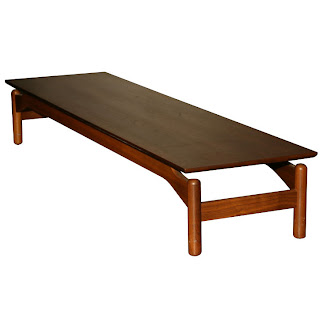
So what made Grossman such a huge success and impactful designer? Well being from the birthplace of Swedish modernism didn’t hurt. Born in Sweden in 1906, at a time when many women were starting families or staying at home, she was apprenticing at woodworking shops, mastering technical drawings and traveling all over Europe for inspiration. This strong past really paid off, and she became a big hit for her work in Sweden. The success followed her when she moved to the US in the 1940s. Opening up her own shop selling her designs, she would also go on to be a pretty good architect, creating 14 homes in Los Angeles. She had a total of 40 years worth of good design, and her work is lauded today for its unique look and quality.
Swank Lighting is an amazing resource not just for the best vintage Murano glass lamps in the market today, but also a wonderful resource for interior design inspiration and a great place to get an education about past and present designers. Keep up-to-date with everything we do on our Facebook page and our twitter.
Monday, October 11, 2010
Friday, October 8, 2010
Contemporary Glass Artist Profile: Jeff Zimmerman!
We don’t NEARLY cover enough glass artists making amazing glass art these days, so today we’d like to change that with bringing you the work of Jeff Zimmerman. We spotted some of his pieces on 1stdibs not too long ago and we were completely blown away (pun intended!) by his modern take on this ancient art. Read on for more information about him.
The first pieces we came across of Zimmerman’s are his "Biomorphic bubble,” "Crinkled Series,” and “Sculptural bottle.” It was clear we were dealing with an amazing glass artist, not only from his obvious mastery of the material, but his post-modern take on themes and the way he uses the material. His “Biomorphic Bubble” just absolutely transcends glass art as merely functional, and gives it an ethereal, artistic touch that we rarely see anymore. All glass is delicate, of course, but this piece looks like it could blow away if you blew too hard. Partnering that with illumination, and you get a very powerful piece.
While he definitely creates art for art and sculptural sake, many of the pieces he works on do have the element of functionality, mainly in light fixtures. Perhaps it’s because of glass’ already very light transmitting nature.
Born in Kentucky in 1968, his mother was a painter and his step-father a sculptor, ensuring he was raised in a very creative household. Raised in Colorado, early exposure to nature has been a pivotal part of his work. He took his first glass-blowing class while going toward a degree in Anthropology in Santa Barbara, California, and never looked back. He exposed himself early to the glassworks of the masters of glass blowing, so he doesn’t just work in his own style; he has the expertise of the masters backing up his technique and style. Very influenced by other contemporary glass artists, he was able to approach glass in a different way than classical masters do. Now hailing from Brooklyn, New York, his work is really inspiring many contemporary glass artists. It is certainly inspiring us!
Love what you see in this post but want more? Like fun perfect pairs, designer influence profiles and profiles of contemporary designers? Thank goodness for you we’ve got a Facebook page and tweet a lot; you can keep up with everything Swank Lighting does.
Subscribe to:
Posts (Atom)


